
Agriculture Ministry Launches Corporate Strategic Plan 2025–2030 to Drive Agricultural Transformation and Food Self-Reliance
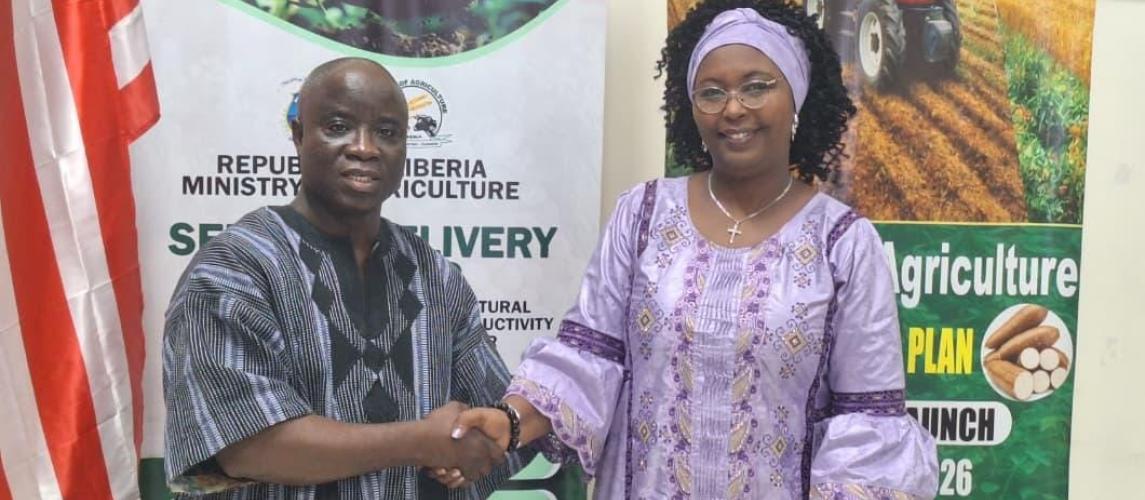

[Monrovia, Liberia – [February 18, 2026] — In a bid to boost agricultural productivity, strengthen food security, and accelerate Liberia’s transition toward food self-reliance, the Ministry of Agriculture has launched its Corporate Strategic Plan (2025–2030), positioning the document as a results-driven framework to improve coordination, accountability, and sustainable agricultural development.
The Strategic Plan, funded by the International Fund for Agricultural Development (IFAD), provides the institutional roadmap for implementing Liberia’s agricultural priorities under the National Agriculture Development Plan, which supports President Joseph Nyuma Boakai’s vision for Liberians to feed themselves.
Speaking at the launch, Agriculture Minister Hon. Dr. J. Alexander Nuetah described the Strategic Plan as a national obligation to transform how agriculture is implemented and managed in Liberia.
“This launch is a national commitment to ensure that Liberia feeds itself, creates opportunities for wealth creation, and builds a resilient agricultural economy for future generations,” Minister Nuetah said.
The Minister emphasized that although Liberia has significant agricultural potential, including over four million hectares of arable land, abundant rainfall, and a youthful population, progress has been constrained by limited coordination and weak implementation.
“Our challenge is not potential. Our challenge is implementation, coordination, investment, and accountability. Resources committed to agriculture must produce measurable results,” he noted.
The Strategic Plan prioritizes increased domestic food production, expanded mechanization, private-sector investment, youth and women's empowerment, climate resilience, and institutional reforms to ensure measurable outcomes across the sector. It is anchored on five key priorities: strengthening food and nutrition security; promoting inclusive agribusiness development; enhancing research and extension services; protecting land, forest, and water resources; and reforming agricultural institutions to improve performance and service delivery.
Highlighting the importance of partnerships in achieving the Plan’s objectives, the Minister also acknowledged IFAD’s role in supporting the development of the strategy. “We appreciate IFAD’s support in the development of this Strategic Plan and its continued partnership with Liberia as we move from planning to implementation and results,” he added.
The Minister further called on development partners, the private sector, civil society, and farmers’ organizations to align efforts behind the national strategy to ensure coordinated implementation and sustainable impact.
“This plan will only succeed if it is owned by all of us — government, partners, private sector, and farmers alike. Agriculture is not just a sector; it is the foundation of Liberia’s economic prosperity,” he said.
For her part, IFAD Country Director Pascaline Barankeba described the Strategic Plan as a critical milestone in advancing Liberia’s vision for a productive, resilient, inclusive, and market-oriented agricultural sector, commending the Government of Liberia for demonstrating strong ownership in translating policy ambition into operational direction.
“The Strategic Plan plays a critical operational role by translating the national agriculture vision into clear institutional direction, aligned priorities, strengthened accountability, and results-oriented implementation,” she said. “It serves as the bridge between policy ambition and effective delivery.”
Ms. Barankeba noted that challenges such as low productivity, climate vulnerability, limited access to finance, and weak value chains continue to constrain smallholder farmers and the transformation of the agri-food system, emphasizing that the Strategic Plan addresses these constraints through improved coordination, stronger governance systems, and a results-focused institutional framework.
“The success of this strategy will ultimately be measured by tangible results—higher productivity, increased rural incomes, stronger resilience to climate shocks, and improved food security,” she added.
Reaffirming IFAD’s continued partnership, she stated, “IFAD remains committed to working closely with the Government of Liberia to support inclusive and climate-resilient agricultural development that delivers tangible results for smallholder farmers, women, and youth.”
Development partners, including the Food and Agriculture Organization (FAO) and the European Union (EU), also reaffirmed their commitment to supporting implementation of the Ministry’s Strategic Plan, emphasizing strengthened coordination, national ownership, and sustained investment as critical to achieving inclusive and resilient agricultural growth.
The Ministry of Agriculture reaffirmed its commitment to implementing the Strategic Plan through tracking performance indicators, publishing results, and maintaining transparency in delivery, marking an important step toward building a resilient agricultural sector capable of driving inclusive growth, improving rural livelihoods, and ensuring long-term national food security
