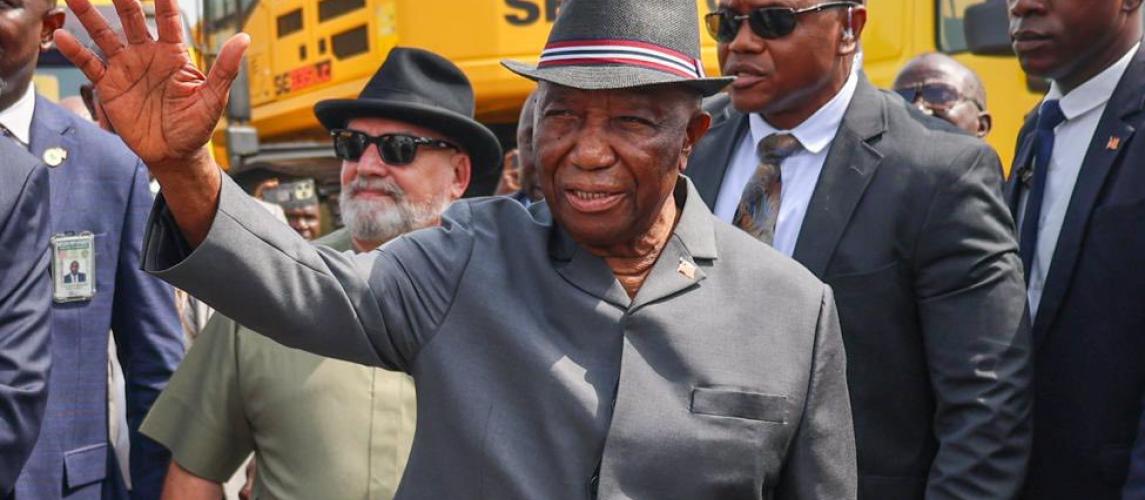
Executive Mansion, Monrovia – His Excellency Joseph Nyuma Boakai, Sr., President of the Republic of Liberia, on Monday morning, toured 137 road construction machines at the Freeport of Monrovia, marking the arrival of the first batch of 285 heavy-duty equipment procured by Government to accelerate nationwide road development.
The consignment of equipment, popularly called Yellow Machines, forms part of the Administration’s ongoing infrastructure transformation program aimed at improving road connectivity, facilitating economic growth, and enhancing access to markets, schools, and health services across Liberia. The machines, which arrived in the country on Sunday, February 22, 2026, will be deployed across the counties to rehabilitate and expand the national road network, ease transportation challenges, boost agricultural productivity, and strengthen links between urban and rural communities.
Additional consignments, comprising the remaining units are expected in subsequent shipments, representing a major milestone in advancing the Government’s ARREST Agenda for Inclusive Development.
Also during the visit, President Boakai also toured a warehouse facility at the port containing assorted relief and educational materials donated to support vulnerable children and students nationwide.
The items were provided by Bishop Trevor Stephen Cockings, President and Founder of His Church Charity, a United Kingdom-based humanitarian Organization and longtime friend of the President.
The donation includes brand-new shoes, sneakers, slippers, clothing, jerseys, and essential school supplies intended to benefit vulnerable children, underserved communities, and students in public schools, particularly those targeted under the Government’s “Back to My Classroom” initiative. This program focuses on counties where enrollment exists but school attendance remains inconsistent, with the goal of reducing poverty-related barriers to education.
Distribution of the items has already commenced in Rivercess, Grand Bassa, and additional counties, reaching approximately thirty-six schools in initial phases. The initiative is being implemented through coordinated efforts involving the Ministry of Gender, Children and Social Protection, the Ministry of Education, and the project management team overseeing the program.
To ensure transparency and accountability, a strict distribution mechanism has been established by which donated items are handed directly to students during supervised school visits. Comprehensive distribution reports are then prepared for submission to the donor Organization.
President Boakai reaffirmed his Administration’s commitment to infrastructure expansion and human capital development, emphasizing that improved roads and strengthened educational support systems remain essential pillars for national growth and inclusive prosperity.
